A new arrival at Hill Farm
Some entrances deserve a proper welcome.
The Farmall Tractor: How One Machine Changed American Farming Forever
Hill Farm welcomes a classic Farmall tractor to its entrance drive. Learn how the Farmall revolutionized American agriculture and why it still turns heads more than a century later.
What Made the Farmall Tractor Revolutionary?
Before the Farmall, the American farm was still largely built around horsepower. In 1924, International Harvester introduced the Farmall, the first true all-purpose row-crop tractor. This new technology rewrote the rules of agricultural work in a single season. It could cultivate between crop rows, pull implements, and take on the kind of field work that had previously required multiple pieces of equipment and a team of horses. Farmers who had spent generations working the land one way suddenly had a machine that could do more, faster, with less.
Why Did the Farmall Become the Most Recognized Tractor in American History?
The Farmall's design was genuinely clever. Its narrow front axle and high clearance allowed it to straddle crop rows without damaging the plants, which was something no general-purpose tractor had managed before. International Harvester refined the design over decades, and by the mid-twentieth century, the distinctive red Farmall was a fixture on farms across the country. By the 1950s, it is estimated that Farmall tractors were working on more American farms than any other brand. The name became so synonymous with farm machinery that many rural families simply called any tractor a "Farmall," regardless of who made it.
What is the story behind Hill Farm’s Farmall Tractors?
The “new” Farmall tractor was lovingly restored in Springfield, Illinois, and brought to Hill Farm in time for America's 250th celebrations. The “old” Farmall tractor that welcomed guests to Hill Farm is currently being restored and will return to the campus as soon as its glow-up is complete.
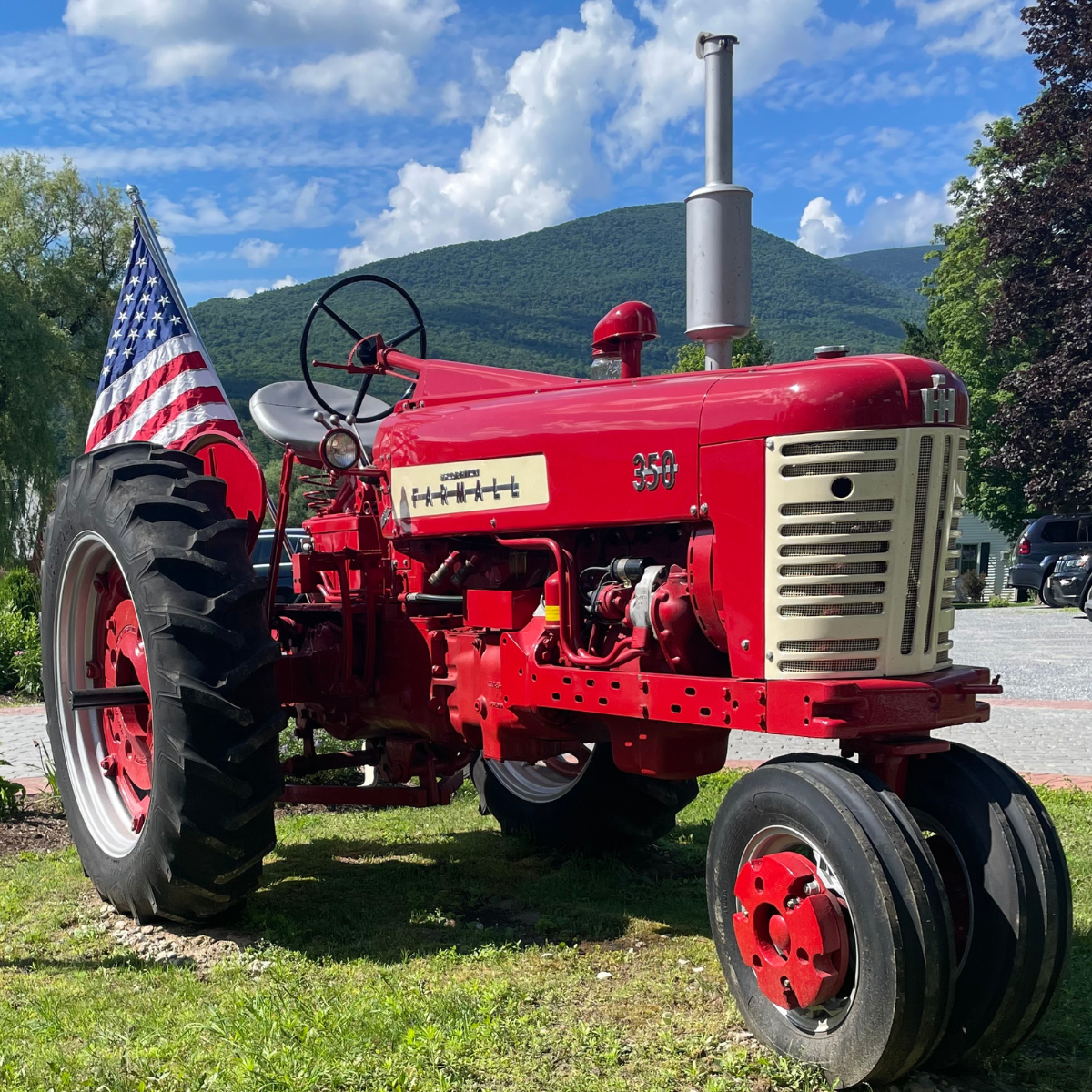
Hill Farm’s Farmall Tractor and Green Mountain views.
